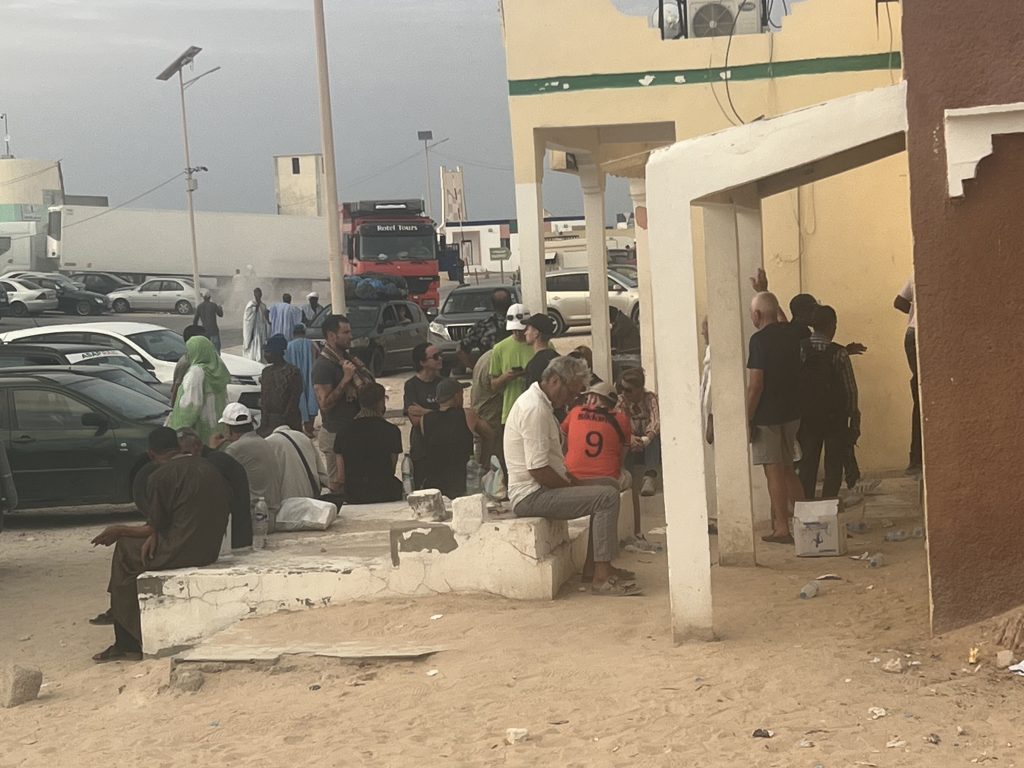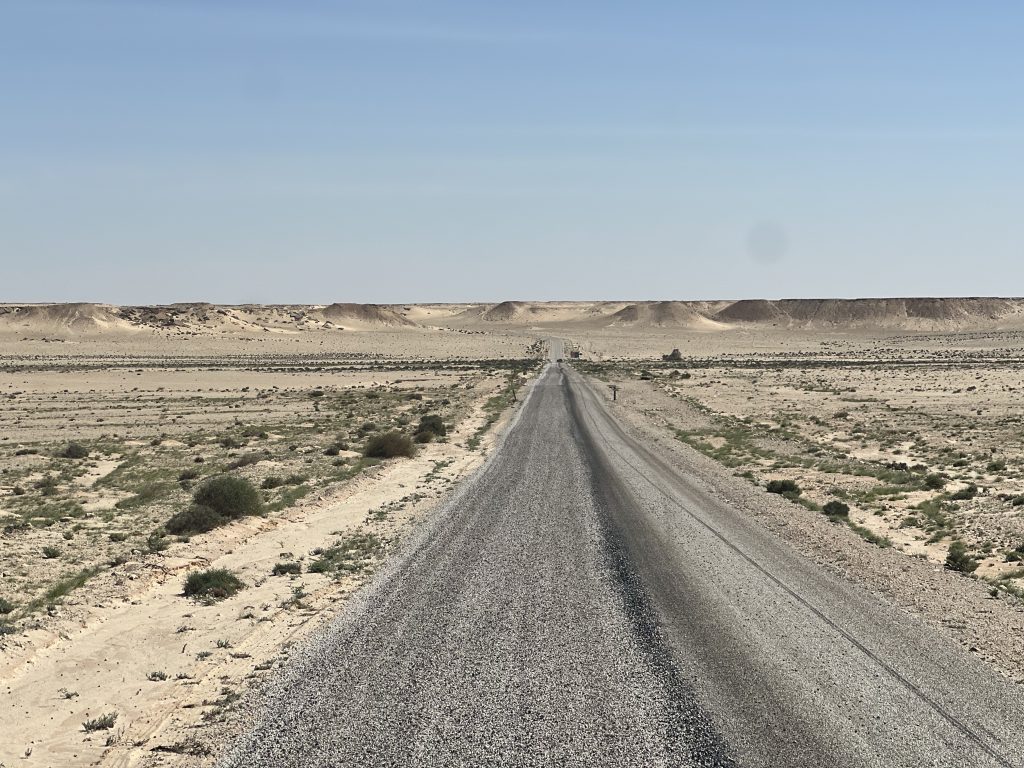
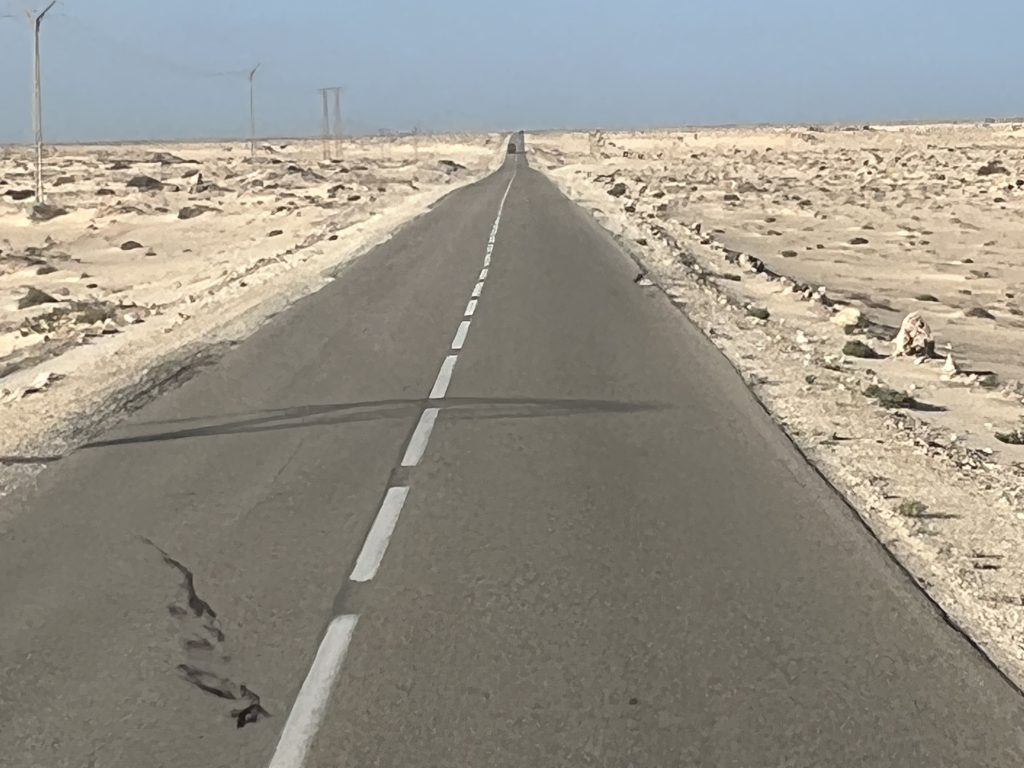
The first day after leaving Dakhla we crossed the Tropic of Cancer where there was a small roadside sign with a few tourists taking selfies – we didn’t stop. After two days of driving we arrived at the border between Morocco and Mauritania. Land border crossings were notorious for being long winded affairs; officials seemed to have no sense of urgency nor did they have compassion for the folk who were being processed. We were told that officials accepted bribes quite openly.
It was 10 am when we joined the queue of vehicles waiting to cross the border – we finally cleared the Moroccan border at 1pm. We then discovered we couldn’t leave the compound because the officers controlling the exit gate were having their lunch break. After another hour’s wait we were able to set off across no-man’s-land towards Mauritania.
The road surface was very rough with huge ruts and potholes, so we had to drive very, very slowly. We were advised not to veer off the road as the surrounding area was full of land mines.
We entered the Mauritanian border compound at 3 pm and we were finally free to leave at 8 pm. We employed a “fixer” for €20 – he was an unofficial guide who showed us where to go and what to do. There were no orderly queues and angry scuffles often broke out amongst those waiting. One poor man crashed to the ground, having some kind of fit. It was after dark when we finally left. We were hot, tired and hungry. We stopped as soon as we found a place to pull off the road, had large glass of wine and something to eat.