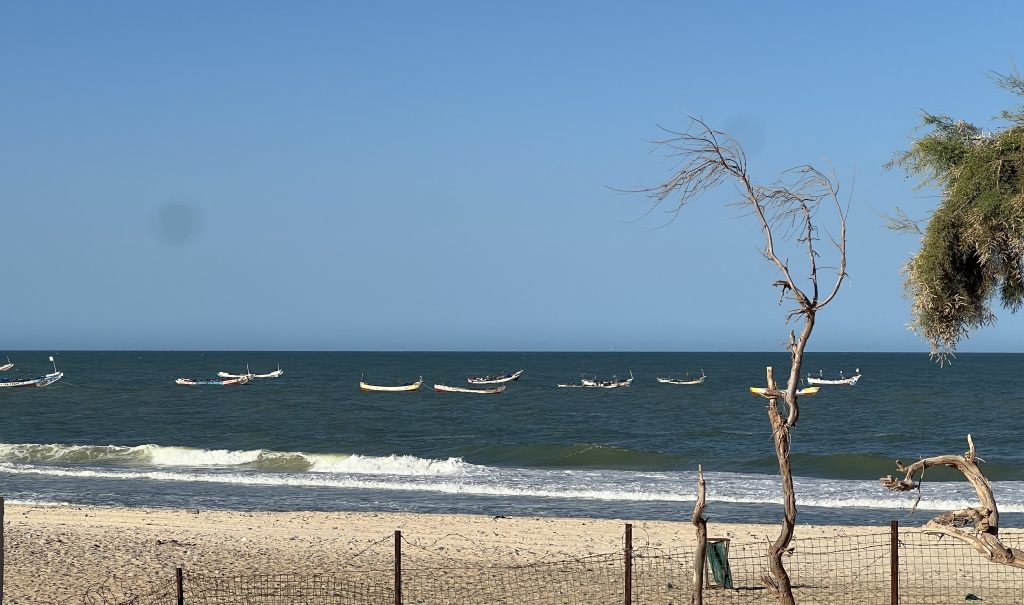
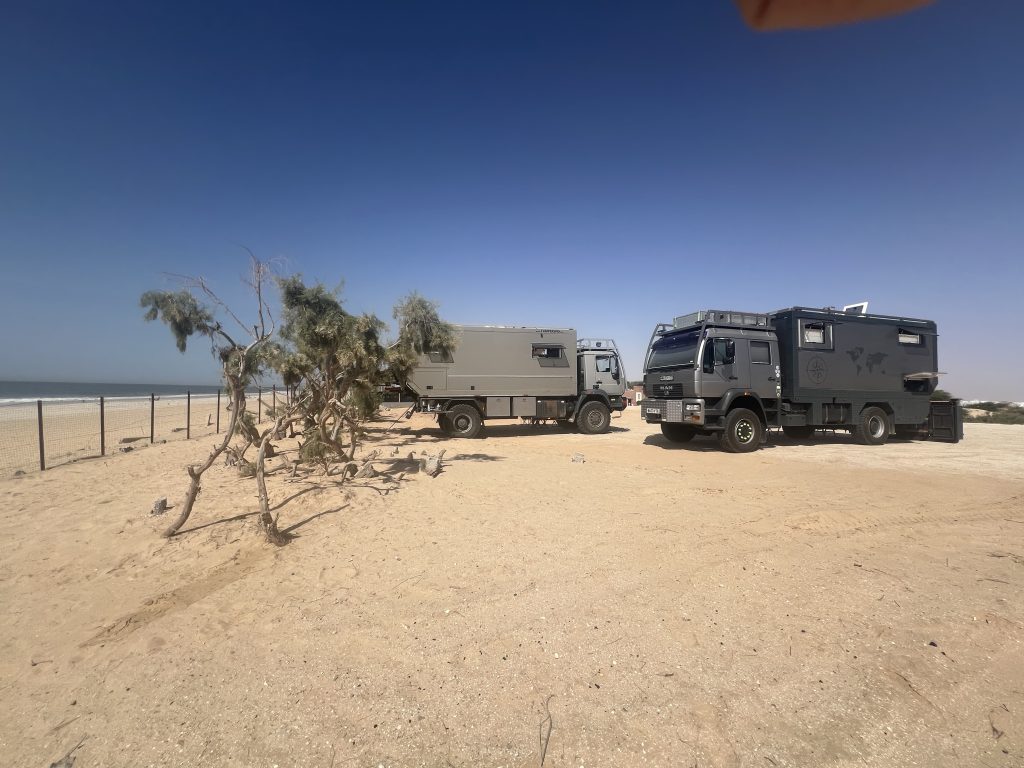
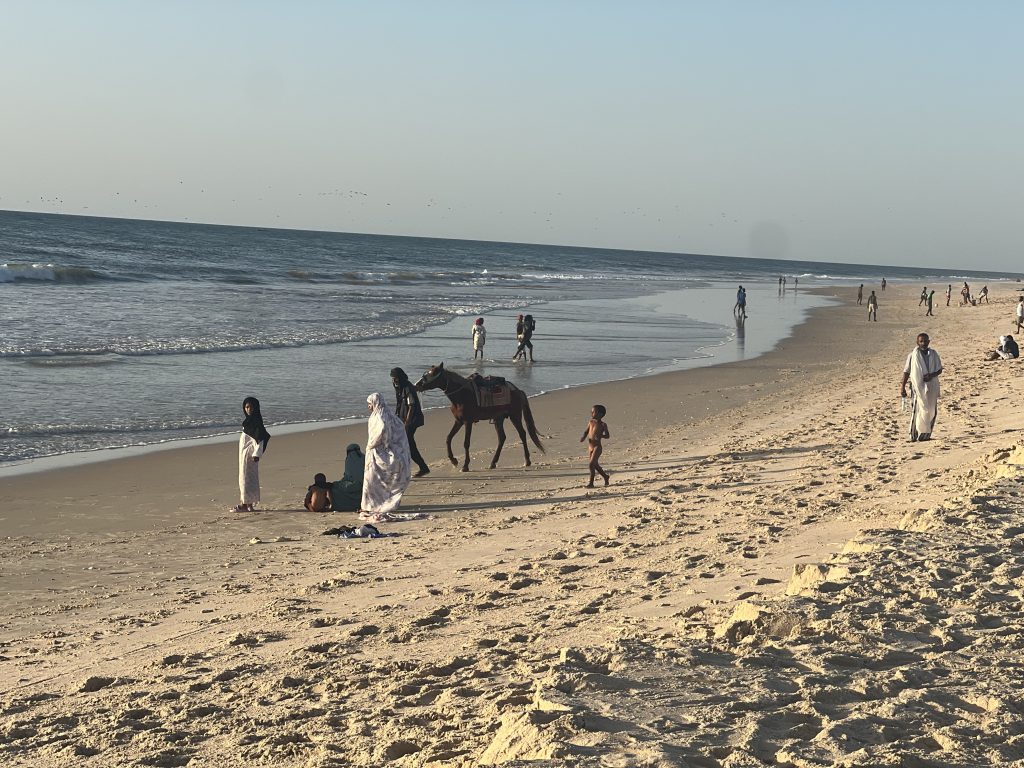
Mauritania gained its independence from France in 1960 and was now an Islamic republic. Alcohol was totally prohibited throughout the country (gulp!). We stayed at a beachside campsite on the outskirts of the capital, Nouakchott (sounds like Noir-chott). We used a taxi when we needed to go into the city. The place was a bit of a shanty town, it had Tarmac-surfaced main roads with wide sandy margins, leading to narrow unpaved streets. By far the biggest and most imposing building in the whole city was the Embassy of the United States of America, which dwarfed everything including the mosques.
In the city it was hot (30°), dusty and the traffic was chaotic. On one occasion our taxi was stopped by a uniformed policeman who asked Ali, the taxi driver, to pay money for some minor traffic infringement. Ali told the policeman that he was carrying passengers from the UK and we added a polite English “hello” as if we were visiting royalty. The policeman gave an angry shrug and let us go on our way.
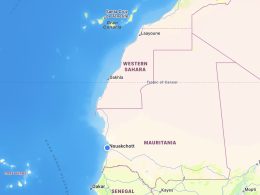
The traditional pirogues were normally used for fishing but we heard that a pirogue, crammed full of migrants, had sunk trying to reach the Canary Islands – more than one hundred people had drowned. We were told that this was a regular occurrence, people-smugglers would transport folk from the south, taking them north to the Canaries, from where they hoped to get into mainland Europe. It was a very dangerous journey.