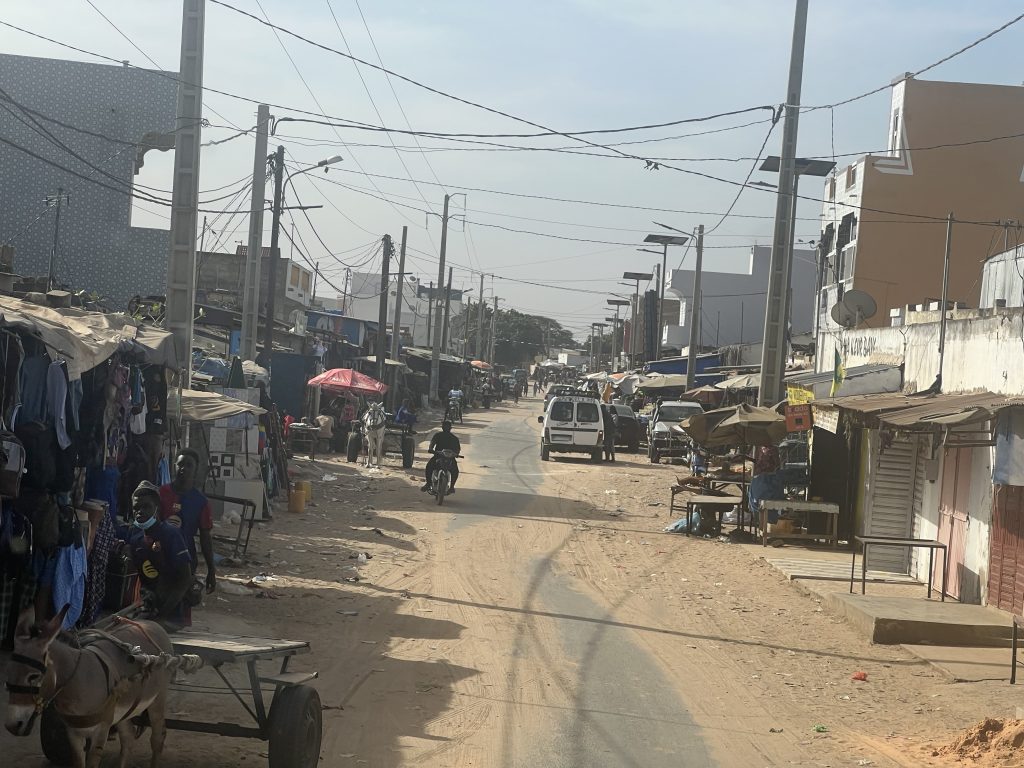
Senegal felt a very different country from Mauritania. It was non-secular, although the vast majority of the population were Muslim. They had an elected President and Prime Minister. Tourism was important to Senegal as well as fishing and agriculture. Mining and recent oil and gas discoveries boosted the economy.
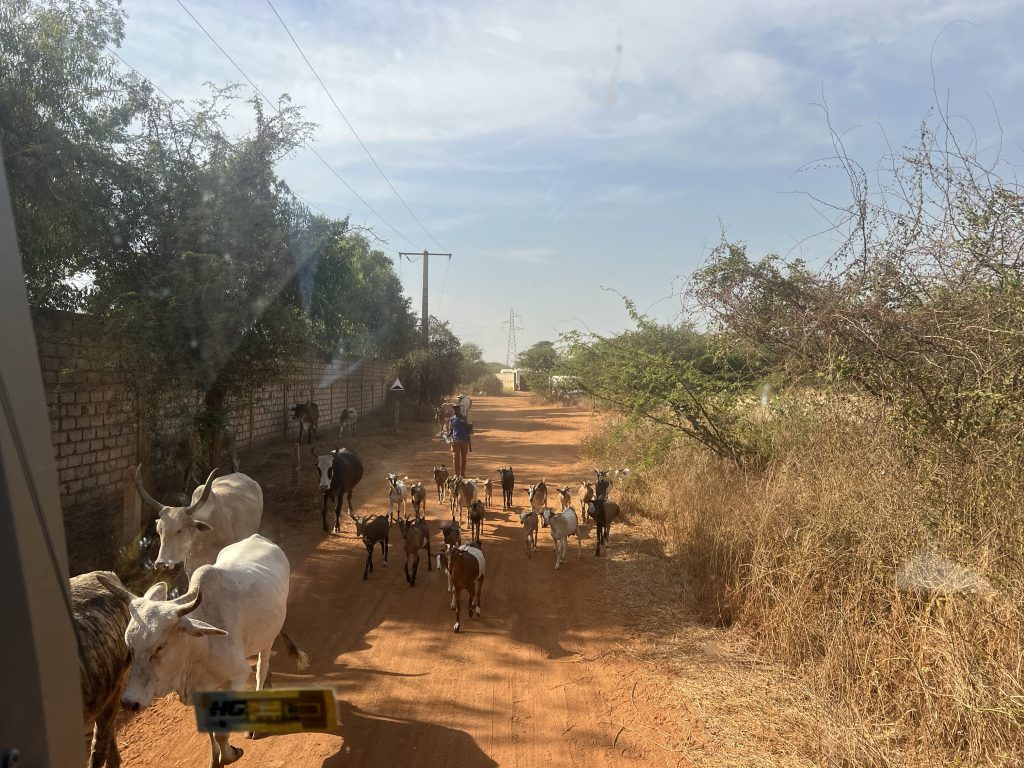
The drive south from Port Louis took longer than we expected. The road had potholes so deep you had to drive around them and there were also huge speed bumps, often unmarked, that reduced traffic to a crawl. Just one small section of our route was a toll road which allowed us to travel more quickly – the toll charged was £3, we just wished there had been more of it.
Later that day we were pulled over by the police for illegally overtaking a car (on those roads we were barely able to overtake a bicycle). The policeman was aggressive and took Tony’s driving licence and our vehicle registration document, telling us we needed to go to the police station to pay a fine and retrieve our documents. Turned out what we needed to do was to pay the officer some 30,000 francs (£45) which he trousered before allowing us on our way. It was often reported that there were corrupt officials in those parts, it left us with a feeling of distaste.
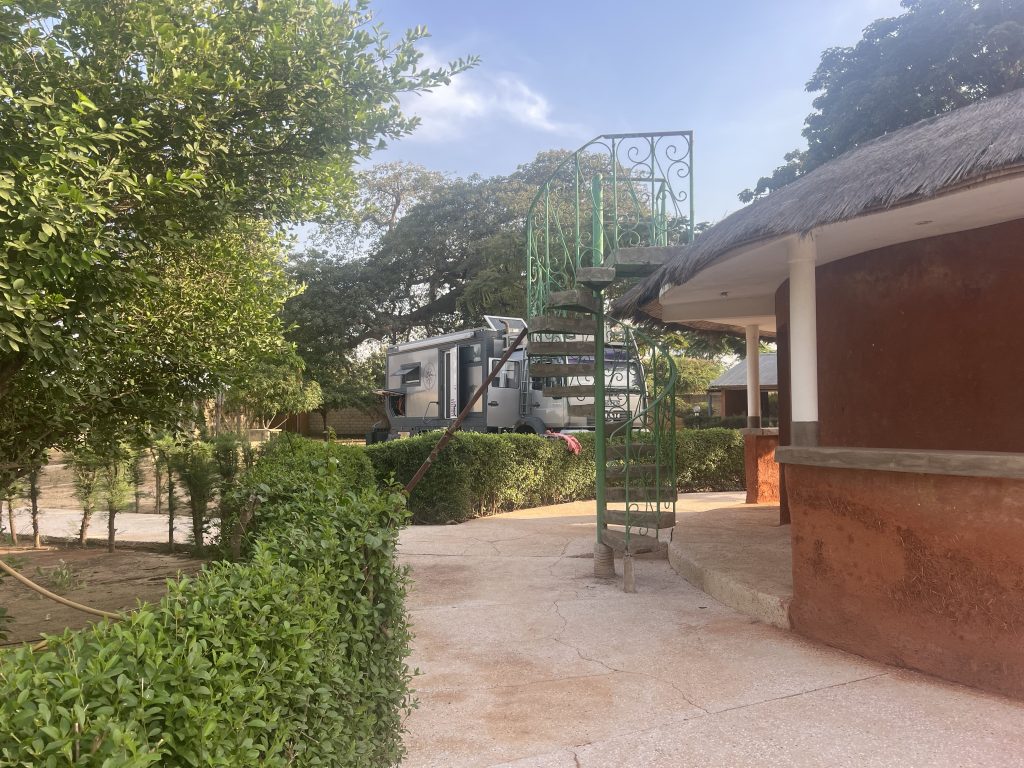
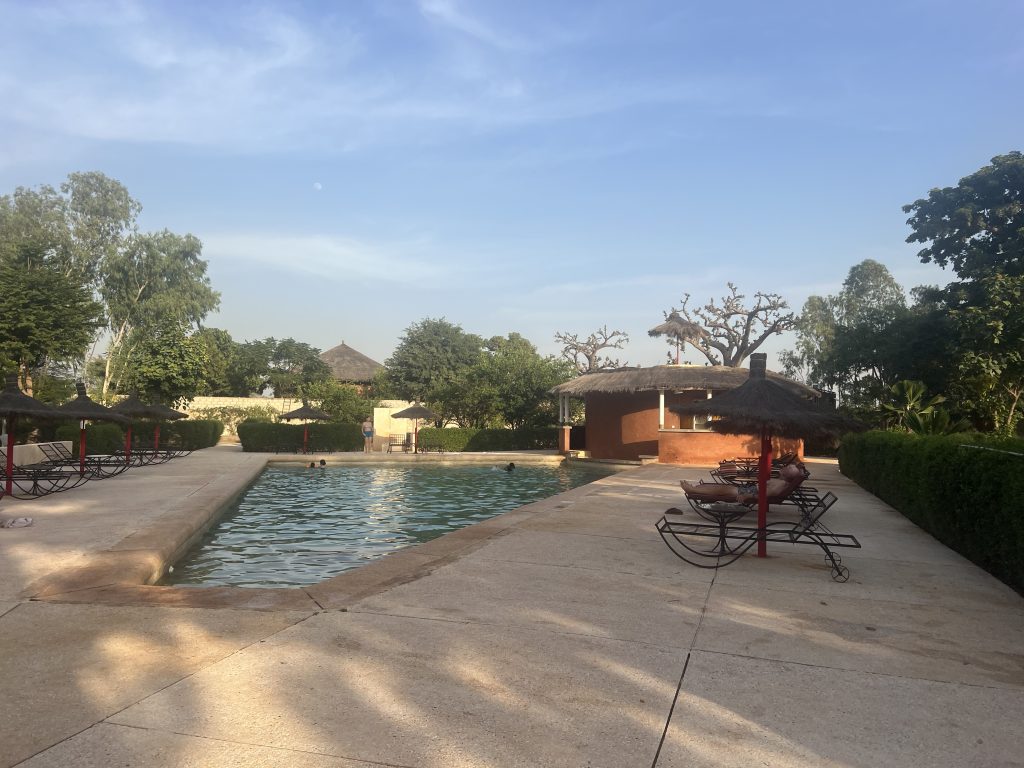
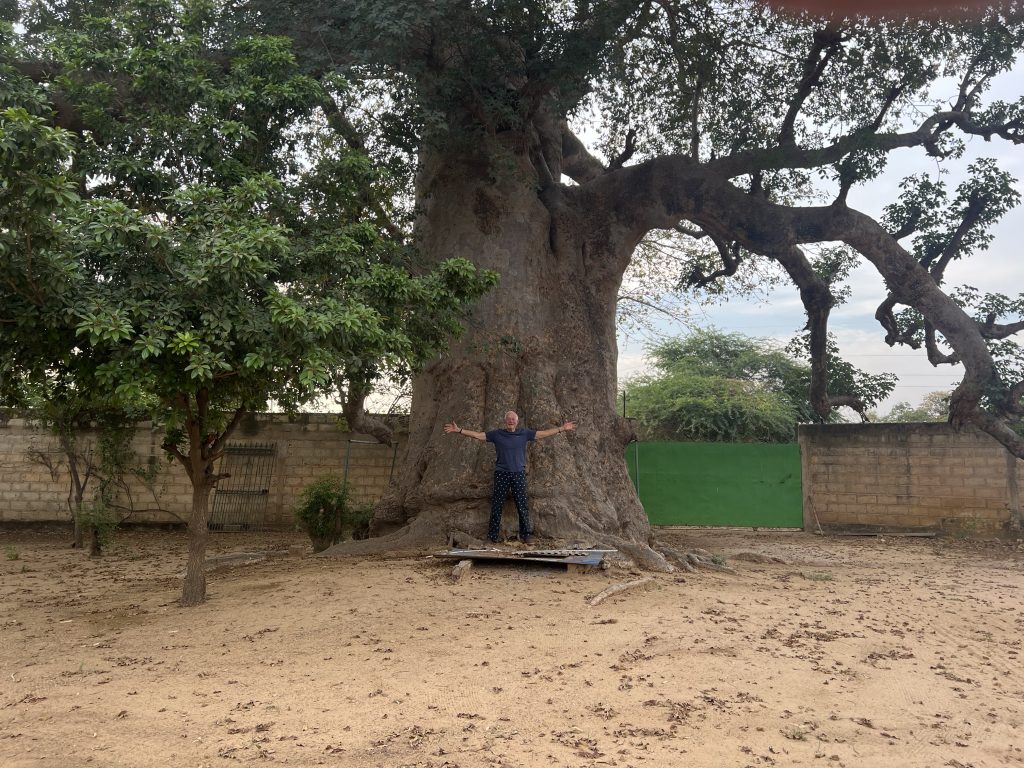
We stayed at a camp site called Baobab Soleil. There was a small swimming pool which provided a welcome respite from the heat.